
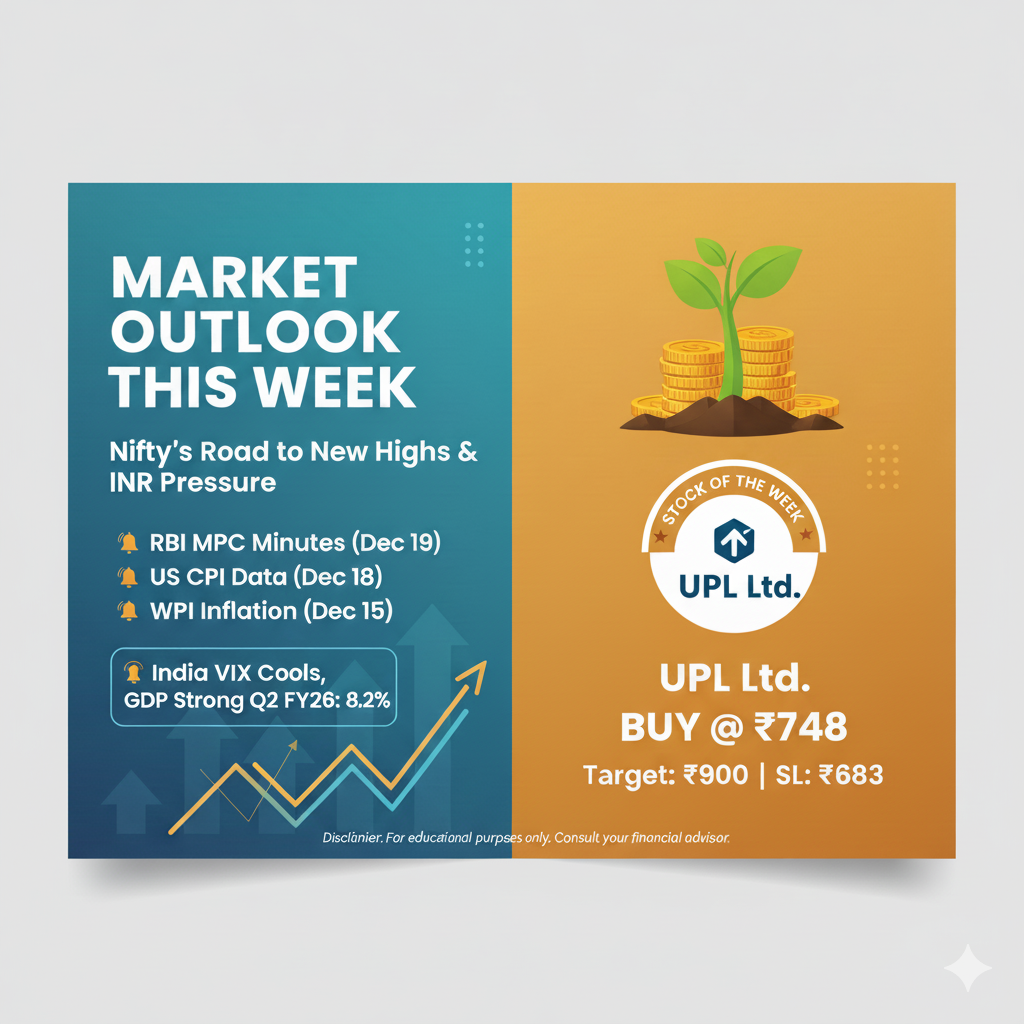
The Indian stock market enters a crucial and potentially explosive week, packed with high-impact domestic and global triggers. From RBI MPC minutes and WPI inflation data to US CPI numbers, investors and traders on Dalal Street are bracing for volatility — even as optimism around record highs in Nifty refuses to fade.
Let’s decode the key market drivers, sectoral trends, index outlook, and the stock of the week that could define market momentum in the days ahead.
🔔 Key Events to Watch This Week
1️⃣ RBI MPC Minutes – Friday, December 19
All eyes are on the RBI Monetary Policy Committee (MPC) minutes, scheduled to be released on Friday. These minutes will provide deeper insight into RBI’s stance on interest rates and its future rate-cut trajectory heading into 2026.
Market participants will closely analyze:
- RBI’s inflation outlook
- Growth commentary
- Signals around future policy easing
Any dovish undertone could fuel fresh upside in equities, especially banking and interest-sensitive stocks.
2️⃣ WPI Inflation – Monday, December 15
Ahead of the MPC minutes, Wholesale Price Index (WPI) inflation data will be the first domestic trigger of the week.
A benign print could reinforce expectations of policy support, while a surprise uptick may cap near-term gains.
3️⃣ US CPI Inflation – Thursday, December 18
On the global front, US CPI inflation numbers will be keenly tracked. With Wall Street currently under pressure due to AI-sector concerns overshadowing the Fed’s rate cut, inflation data could influence:
- Global risk appetite
- FII flows
- Currency movement, especially INR
💱 Indian Rupee Under Pressure – A Market Theme to Watch
The Indian Rupee (INR) has slipped past 90.50 per USD, hovering near record lows following RBI’s December rate cut.
What’s weighing on the INR?
- Nearly 6% decline in 2025 — weakest among Asian peers
- Soft trade flows
- Persistent capital outflows
- Impact of steep US tariffs on Indian exports
Despite currency weakness, Indian equities have shown resilience — a classic case of equity optimism amid FX stress.
📊 Volatility Cooling Down: India VIX Signals Confidence
In a positive development for market sentiment:
- India VIX fell further to 10.11, signaling reduced volatility expectations
- This comes even as Nifty aims for fresh all-time highs
Lower VIX levels typically indicate growing trader confidence, smoother price action, and better risk-reward setups for positional trades.
🚀 Why New Nifty Highs Look Like the “New Normal”
Markets are being supported by strong macro fundamentals:
🇮🇳 India’s Q2 FY26 GDP at 8.2%
- Strong consumption demand
- Sectoral momentum across manufacturing and services
- Reinforces India’s position as one of the fastest-growing major economies
🌍 Trade Deal Optimism
Rising hopes around a potential U.S.–India trade agreement have emerged as the biggest positive catalyst, improving sentiment across export-oriented sectors like IT, metals, and autos.
⚠️ The Spoiler: Weak Global Cues
While domestic sentiment remains constructive, Wall Street weakness remains the key overhang, with concerns that AI-led growth fears are overshadowing Fed rate cuts.
📌 Bottom Line Market View
Nifty may struggle for clear direction in the short term, but markets often surprise when sentiment improves quietly.
This is the season of miracles — keep your bullish stock list ready before Santa arrives with momentum gifts.
🔍 Nifty & Bank Nifty Outlook
Nifty 50
- CMP: 26,047
- Support: 25,703 / 25,350
- Resistance: 26,326 / 26,651
- Range: 25,733 – 26,322
- 200 DMA: 24,721
- PCR: 1.14
- Bias: ✅ Positive
Preferred Trade:
👉 Buy Nifty at CMP
- Targets: 26,375 / 26,600
- Aggressive Target: 26,850
- Stop Loss: 25,682
Bank Nifty
- CMP: 59,390
- Support: 58,200 / 57,000
- Resistance: 60,500 / 62,000
- Range: 58,700 – 60,300
- 200 DMA: 55,225
- PCR: 0.90
- Bias: ✅ Positive
📈 Nifty Options Data – What It Indicates
- Trading Range: 25,500 – 27,000
- Max Call OI: 27,000 (major resistance)
- Max Put OI: 26,000 followed by 25,000
- Put Writing: 26,100 & 25,900 → Indicates strong base
📌 A sustained close above 26,300 could open doors to fresh all-time highs.
🏭 Sectoral View
✅ Bullish Sectors
- Banking
- IT
- Auto
- Metals
❌ Bearish Sectors
- FMCG
- Media
- Power
🔥 Stocks in Focus
Bullish View
ASHOKLEY, SAIL, BHEL, TATASTEEL, HINDALCO, NYKAA, ETERNAL, NATIONALUM, MUTHOOTFIN, VEDL, MCX, CUMMINSIND, NUVAMA
Bearish View
HUL, PIIND, SIEMENS, MAZDOCK, HAL, SOLARINDS, PAGEIND, ASIANPAINTS
⭐ Stock of the Week: UPL Ltd.
Buy | CMP: ₹748
- Target: ₹900
- Stop Loss: ₹683
- 52-Week H/L: ₹775.30 / ₹493
- Holding Period: 12–15 Months
Why UPL?
UPL Ltd., a global leader in crop protection and sustainable agriculture solutions, has delivered a strong turnaround in Q2 FY26.
Q2 FY26 Highlights:
- Revenue: ₹12,019 crore (+8% YoY)
- EBITDA: ₹2,205 crore (+40% YoY)
- PAT: ₹553 crore (vs loss last year)
- EBITDA Margin: ~18.3%
- Debt Reduced: ₹3,729 crore
Technical View
- Breakout above ₹736 resistance
- 200-DMA at ₹680 provides strong base
- Indicates long-term accumulation and trend reversal
📌 Preferred Strategy: Buy at CMP and on dips between ₹710–725, with targets at ₹789 / ₹867, and aggressive upside towards ₹1000.
🧠 Final Thoughts
Despite global uncertainties and currency pressures, India’s equity story remains structurally strong. Falling volatility, strong GDP growth, improving corporate earnings, and trade deal optimism continue to support the bullish narrative.
👉 Keep your Nifty all-time-high cap ready!
⚠️ Disclaimer
The investments & trading ideas recommended in the market analysis, research reports, etc. may not be suitable for all investors. This article or data points does not construe investment advice as stock market investments are subject to market risks so please refer to your financial consultant advice before Investing or trading. All information is a point of view, and is for educational, Learning and informational use only. The author or the group admin accepts no liability for any interpretation of articles or comments on this platform being used for actual investments. Registration granted by SEBI and certification from NISM in no way guarantee performance of the intermediary or provide any assurance of returns to investors. Investors must make their own investment decisions based on their specific investment objectives, goals and financial position only after consulting with registered market intermediaries.