
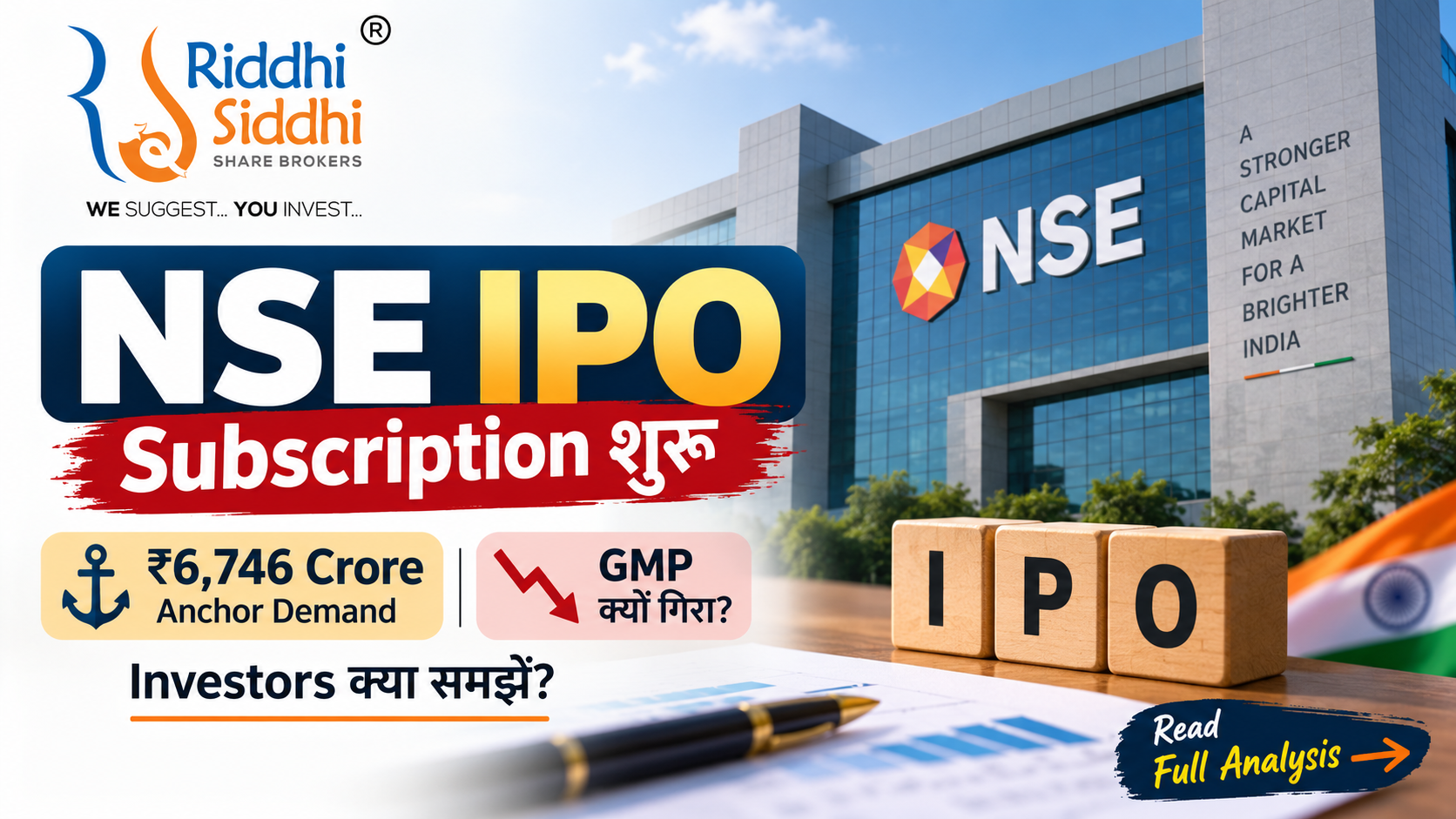
India के capital market की सबसे awaited listings में से एक आखिरकार public subscription के लिए खुल गई है.
National Stock Exchange of India (NSE) IPO आज, 17 September 2026 से subscription के लिए open है, और issue 21 September 2026 तक खुला रहेगा.
लेकिन opening day पर सबसे interesting कहानी सिर्फ subscription numbers नहीं है.
IPO खुलने से पहले NSE ने anchor investors से करीब ₹6,746 crore जुटाए. दूसरी तरफ, IPO के आसपास चल रहा Grey Market Premium (GMP) अपने पहले के ऊंचे levels से नीचे आया है.
तो सवाल यह है:
Strong anchor demand और falling GMP — दोनों एक साथ हमें क्या बता रहे हैं?
और retail investor को NSE IPO subscription status देखते समय किन numbers पर सबसे ज्यादा ध्यान देना चाहिए?
आइए समझते हैं.
NSE IPO 2026: पहले Key Numbers समझिए
NSE IPO के मुख्य details:
- Price Band: ₹1,700–₹1,785 per share
- Lot Size: 8 shares
- Minimum Investment at Upper Band: ₹14,280
- IPO Opening Date: 17 September 2026
- IPO Closing Date: 21 September 2026
- Issue Size: लगभग ₹22,569 crore
- Issue Structure: 100% Offer for Sale (OFS)
- Listing Exchange: BSE
एक important point यह है कि यह पूरी तरह Offer for Sale है. यानी IPO से मिलने वाला पैसा NSE के business में fresh capital के रूप में नहीं जाएगा; existing shareholders अपनी हिस्सेदारी बेच रहे हैं.
अगर आप NSE IPO की valuation, price band, financials, lot size और major risks विस्तार से समझना चाहते हैं, तो हमारा पहले का detailed analysis पढ़ें:
👉 NSE IPO Price Band ₹1,700–₹1,785: Should You Apply? Valuation, Lot Size, Dates & Key Risks Explained
आज का analysis valuation repeat करने के बजाय subscription demand, anchor book और GMP signals पर focused है.
₹6,746 Crore का Anchor Book इतना Important क्यों है?
Public subscription खुलने से पहले NSE ने लगभग 3.78 crore shares ₹1,785 per share पर anchor investors को allocate किए, जिससे करीब ₹6,746 crore जुटाए गए.
यह allocation price band के upper end ₹1,785 पर हुआ.
Anchor book में बड़े domestic और international institutional investors की participation देखने को मिली. LIC anchor allocation में सबसे बड़ा investor रहा, जबकि overseas institutional names की भी significant presence रही.
इससे एक बात साफ होती है:
Institutional investors ने ₹1,785 के upper price पर meaningful capital commit किया है.
लेकिन यहां एक common misunderstanding से बचना जरूरी है.
Strong anchor demand का मतलब यह नहीं है कि listing gain guaranteed है.
Anchor investors का investment horizon, risk appetite और portfolio strategy retail investors से अलग हो सकती है.
इसलिए anchor demand को एक important demand signal माना जा सकता है — लेकिन investment decision का अकेला आधार नहीं.
NSE IPO GMP क्यों गिरा?
यहीं NSE IPO की opening-day story interesting हो जाती है.
IPO से पहले grey market में NSE shares के लिए premium काफी ऊंचे levels पर दिखाई दिया था. Opening के आसपास विभिन्न market trackers ने GMP को लगभग 8–9% range के आसपास report किया.
इसका मतलब यह नहीं कि IPO कमजोर हो गया है.
बल्कि GMP में गिरावट के कई possible reasons हो सकते हैं:
1. IPO Price Discovery अब Real Market के करीब आ गई है
जब official price band सामने नहीं आया था, NSE को लेकर expectations काफी aggressive थीं.
₹1,700–₹1,785 का official price band आने के बाद investors के पास valuation assess करने के लिए concrete benchmark आ गया.
इससे speculative grey-market pricing naturally adjust हो सकती है.
2. Unlisted Price और IPO Price अलग चीजें हैं
NSE shares लंबे समय से unlisted market में trade होते रहे हैं.
लेकिन:
Unlisted Market Price ≠ IPO Price ≠ Listing Price
इन तीनों markets में liquidity, participants और price discovery अलग हो सकती है.
इसलिए केवल पुराने unlisted price को देखकर IPO listing price assume करना सही approach नहीं है.
3. GMP Official Market Indicator नहीं है
Grey Market Premium किसी recognised stock exchange का official price नहीं है.
यह unofficial market activity को reflect करता है और तेजी से बदल सकता है.
इसलिए GMP को sentiment indicator की तरह देखना बेहतर है — investment thesis की तरह नहीं.
NSE IPO Subscription Status: Day 1 Numbers को कैसे पढ़ें?
Opening day पर NSE IPO में bidding शुरू होते ही retail और non-institutional categories में participation दिखाई देने लगी.
लेकिन investors को Day 1 के intraday subscription number को final verdict नहीं मानना चाहिए.
क्यों?
क्योंकि large IPOs में institutional bidding अक्सर बाद के हिस्से में तेज हो सकती है.
इसलिए केवल यह देखना कि IPO दोपहर तक कितनी बार subscribed हुआ, पूरी कहानी नहीं बताता.
Investors को तीन categories अलग-अलग देखनी चाहिए:
Retail Investors (RII):
यह individual investors की participation और broader public interest का संकेत देता है.
Non-Institutional Investors (NII/HNI):
इस category में larger individual applications और other non-institutional participation आती है.
Qualified Institutional Buyers (QIB):
Mutual funds, foreign institutional investors और other eligible institutions इस category में आते हैं.
IPO बंद होने तक इन तीनों categories की demand का combination ज्यादा meaningful picture देता है.
Note: Subscription figures पूरे trading day में बदलते रहते हैं. इसलिए किसी भी intraday number को उस समय का snapshot ही समझें.
Anchor Demand Strong लेकिन GMP Soft — Contradiction है क्या?
जरूरी नहीं.
दोनों अलग चीजें measure करते हैं.
Anchor book हमें बताता है कि institutional investors official IPO price पर कितनी participation दिखा रहे हैं.
GMP unofficial market में short-term sentiment और expected listing premium को reflect करने की कोशिश करता है.
इसलिए theoretically ऐसा बिल्कुल हो सकता है कि:
Institutional Demand Strong हो + GMP Moderate हो.
और यह automatically bullish या bearish conclusion नहीं बनाता.
असल सवाल यह है कि ₹1,785 पर NSE की valuation investor के investment horizon और risk appetite के हिसाब से reasonable है या नहीं.
इसी valuation question को हमने अपने detailed article में अलग से analyse किया है:
👉 NSE IPO 2026: Price Band, Valuation, Lot Size & Key Risks
एक और Important Point: यह Fresh Issue नहीं है
NSE IPO लगभग ₹22,569 crore का Offer for Sale है.
इसका अर्थ है कि NSE नए shares issue करके company के लिए fresh capital नहीं जुटा रहा.
Existing shareholders अपने shares public investors को बेच रहे हैं.
Retail investors के लिए इसका practical implication यह है कि IPO को केवल उसके बड़े issue size से judge नहीं करना चाहिए.
इसके बजाय सवाल होने चाहिए:
- NSE का business कितना sustainable है?
- Earnings growth कैसी है?
- Regulatory changes business को कैसे affect कर सकते हैं?
- IPO valuation कितनी demanding है?
- Listing के बाद growth expectations realistic हैं या नहीं?
NSE IPO में आगे किन 5 Signals पर नजर रखें?
Opening-day excitement से ज्यादा useful होगा कि investors issue close होने तक इन signals को track करें:
1. QIB Subscription
Institutional participation issue के अंतिम चरण में कैसी रहती है?
2. Retail Subscription
क्या retail demand steadily build होती है?
3. NII/HNI Demand
Large individual investors कितना interest दिखाते हैं?
4. GMP Movement
GMP stabilise होता है, recover करता है या और soften होता है?
5. Overall Subscription on Final Day
Opening-hour numbers के बजाय final demand ज्यादा meaningful होगी.
तो Investors क्या समझें?
NSE IPO की opening ने अभी तक दो अलग signals दिए हैं.
एक तरफ करीब ₹6,746 crore का anchor allocation institutional participation को highlight करता है.
दूसरी तरफ, पहले के elevated levels से GMP का moderation यह याद दिलाता है कि excitement और valuation एक ही चीज नहीं हैं.
यही इस IPO का सबसे important takeaway हो सकता है:
NSE एक major market institution है — लेकिन एक strong business automatically किसी भी price पर strong investment नहीं बन जाता.
Investors को brand name, anchor book या GMP में से किसी एक signal पर decision लेने के बजाय valuation + business fundamentals + subscription quality + risk factors को साथ में देखना चाहिए.
हमारा detailed valuation analysis यहां पढ़ें:
👉 NSE IPO Price Band ₹1,700–₹1,785: Should You Apply?
और broader market outlook के लिए पढ़ें:
👉 The Week Ahead: Fed, NSE IPO, Crude Oil & NYKAA — Nifty Outlook
Riddhi Siddhi Share Brokers के साथ Connect करें
IPO के अलावा equities, derivatives, mutual funds, insurance, SLBM और अन्य market services के बारे में जानने के लिए:
👉 Explore Riddhi Siddhi Share Brokers Services
हमारी Assisted Trading Services के लिए भी हमसे connect करें.
📱 Message +91 99875 53455 to request access to our exclusive WhatsApp community for daily prices, opportunities and market updates.
🌐 Visit Riddhi Siddhi Share Brokers
FAQs
NSE IPO subscription कब शुरू हुआ?
NSE IPO public subscription के लिए 17 September 2026 को खुला और scheduled closing date 21 September 2026 है.
NSE IPO का price band क्या है?
NSE IPO का price band ₹1,700 से ₹1,785 per share है.
NSE IPO का minimum investment कितना है?
Lot size 8 shares है. Upper price band ₹1,785 पर एक lot के लिए minimum application amount ₹14,280 बनता है.
NSE ने anchor investors से कितना raise किया?
NSE ने IPO opening से पहले anchor investors को shares allocate करके लगभग ₹6,746 crore जुटाए.
क्या NSE IPO का GMP गिरा है?
IPO opening के आसपास market reports ने GMP को लगभग 8–9% range में indicate किया, जो पहले देखे गए higher grey-market levels से कम था. GMP unofficial और highly volatile होता है, इसलिए इसे guaranteed listing return नहीं समझना चाहिए.
क्या strong anchor demand listing gain guarantee करती है?
नहीं. Anchor demand institutional interest का एक signal हो सकती है, लेकिन listing price market conditions, valuation, final subscription, investor sentiment और कई अन्य factors पर depend करती है.
क्या NSE को IPO से ₹22,000+ crore मिलेंगे?
नहीं. NSE IPO 100% Offer for Sale (OFS) है. इसलिए issue proceeds selling shareholders को जाएंगे; NSE को fresh capital नहीं मिलेगा.
Disclaimer
Riddhi Siddhi Share Brokers is an NSE & BSE Authorised Person of a leading broker. This content is for educational and informational purposes only and should not be construed as investment advice or a recommendation to subscribe to or avoid any IPO or security. Grey Market Premium (GMP) is unofficial, unregulated and can change rapidly. Stock market investments are subject to market risks, and derivatives can cause significant losses. Investors should read the relevant offer documents and consult a SEBI-registered investment adviser before making investment decisions.